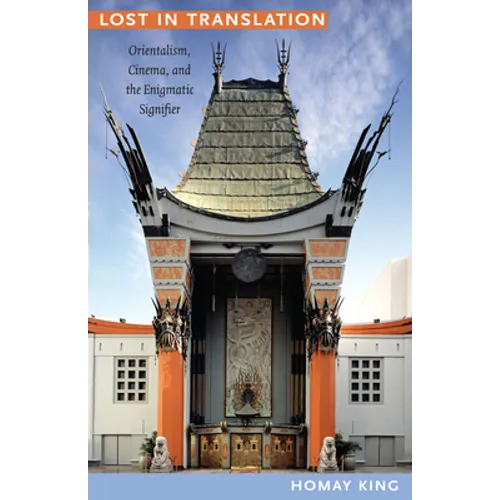
Lost in Translation: Orientalism, Cinema, and the Enigmatic Signifier - Paperback
Lost in Translation: Orientalism, Cinema, and the Enigmatic Signifier - Paperback
Shipping: $8.00 or FREE when you spend $100+
Couldn't load pickup availability
by Homay King (Author)
In a nuanced exploration of how Western cinema has represented East Asia as a space of radical indecipherability, Homay King traces the long-standing association of the Orient with the enigmatic. The fantasy of an inscrutable East, she argues, is not merely a side note to film history, but rather a kernel of otherness that has shaped Hollywood cinema at its core. Through close readings of The Lady from Shanghai, Chinatown, Blade Runner, Lost in Translation, and other films, she develops a theory of the "Shanghai gesture," a trope whereby orientalist curios and décor become saturated with mystery. These objects and signs come to bear the burden of explanation for riddles that escape the Western protagonist or cannot be otherwise resolved by the plot. Turning to visual texts from outside Hollywood which actively grapple with the association of the East and the unintelligible--such as Michelangelo Antonioni's Chung Kuo: Cina, Wim Wenders's Notebook on Cities and Clothes, and Sophie Calle's Exquisite Pain--King suggests alternatives to the paranoid logic of the Shanghai gesture. She argues for the development of a process of cultural "de-translation" aimed at both untangling the psychic enigmas prompting the initial desire to separate the familiar from the foreign, and heightening attentiveness to the internal alterities underlying Western subjectivity.
Back Jacket
With Lost in Translation," her powerful analysis of Asia as an 'enigmatic signifier' for those who inhabit 'the West, ' Homay King stages a compelling encounter between psychoanalytic theory, especially as reformulated in the texts of Jean Laplanche, and the politics of racial, national, and ethnic representation. Identifying East and West alike as sites of internal alterity, this smart, provocative, and persuasive book resists the familiar reductiveness of multiculturalist piety in order to insist on the ongoing work of finding ourselves, no less than our others, as always already in translation."--Lee Edelman, author of "No Future: Queer Theory and the Death Drive"
Author Biography
Homay King is Associate Professor of Art History at Bryn Mawr College.
Share